Tuesday, 6 December 2016

Script: Preliminary Task

SCRIPT: PRELIMINARY TASK

Walking on sunshine’ plays (sarcastically) and appears to be coming from her headphones.

[Shot of girl walking up towards the building, pathway is a third of the way up the screen]
[Close up of her legs/feet as she is walking]
[A medium shot of her approach to the door and lifting her arm to open it]
[A match on action shot of her trying to open the door]
 [Close up shot as she turns her face towards the and reveals her embarrassed expression as the door doesn’t open]

‘Bad day’ begins to play

[eye rolls at the camera for the predictability of the diegetic sound- breaks the fourth wall]
[Medium shot of her moving along the door to find another door and opening it]
[Long shot tracking her from the inside of the building as she walks towards her friends. The shot continues as she sits down and she removes her earphones
[Over the shoulder shot from girl 2 to the girl 1 – Use the 300 rule at this point]

GIRL 1: Awks lol

[Over the shoulder shot back from girl 1 to girl 2]

GIRL 2: That always happens to you!

GIRL 1&2: {laughing}


[High and diagonal angle captures their laughter as the shot fades out]

Saturday, 3 December 2016

Consideration of Representation in our Film and Stereotyping:

Consideration of representation in our film and stereotyping:

Grace Sullivan (Girl teenager 1) - 


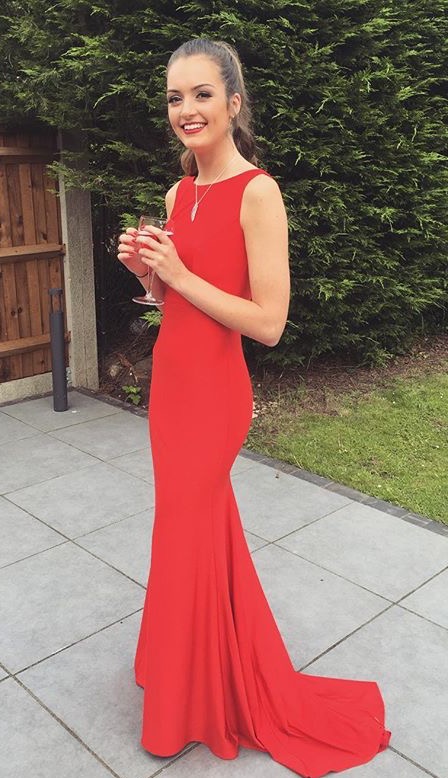
We have known Grace since she was around 6 years old, we grew up with her and know her attributes and qualities very well. She is very attractive, tall, skinny and has long brown hair which can be styled easily for her to fit any role. We choose her as our main actress as she would appeal to many of our male viewers. She is also very active and has played netball at county level for Surrey as well as doing gymnastics and dance for many years. This will help her in her role if we ask her to do anything physically straining eg. chase scenes. She also has experience with acting as she studied it at GCSE and achieved an A grade and continues to study it at A level. Within her GCSE performance she played a variety of roles and one of them involved being a stereotypical teenager.This is some of the reasons why we have chosen her to be our main actress, we see her as a well skilled/ rounded actress who will suit the role we have chosen her for. From the photo to the side you can see more of a full body image of Grace before her prom.

Our main characters (2 boys and 2 girls) involve teenagers aged between 16 to 17, we as a group and the media mainly present a typical teenager as rebellious and arrogant, for example this is presented in the TV program 'Waterloo road'. In particular teenage girls are stereotypically presented in the media as either sassy, popular and often socialites for example like the character Regina George in the film 'Mean girls'. Grace will reinforce the stereotypical teenage girl as she will act with a similar manner as any other 'mean girl/ socialite'. She will act superior and show attitude when talking to the other characters within the film, she will most likely want to be the center of attention but will rely on others when in danger. However the media and in many horror films girls are often presented as the 'damsel in distress' (weak and vulnerable) seeking help or to be saved. For example in the horror film 'Scream' they have used a dumb blonde female as the victim (Tatum Riley), this theory is also supported by the book 'Studying the media an introduction' by Tim O'Sullivan and Co, which states the dumb blonde stereotype might include - blondness, seductive body language and strong makeup" (Page 129).

Overall we believe Grace will be perfect for the role as she holds the skills to present herself as a typical teenage girl as well as make herself look vulnerable and innocent when involved in the more tense, horrifying and graphic scenes. 

Everlasting Journey Script

***Scene 1***

[Opening Shot: Train pulls into the station and the shot stays facing directly straight forwards as it pulls up. Train doors opening at Stoneleigh Station and revealing the body of a possessed looking teenage girl lying in blood on the floor. The camera should appear to flicker and during this time a close up should appear on the screen for a tiny period of time (to be decided during the filming process.) The whole shot should be filmed on a tripod and there should be no camera movement until the train doors have shut again. This shot should be prolonged on purpose for essentially the duration of a train stopping. Other footage can be edited in here of close ups of blood and the girls eyes who could have spooky contact lenses in. This shot should be silent. There could be the enhanced sound of trains moving though.]

{Teenage Girl 1 stretches her hand out towards the door pleading just as the doors begin closing}

[The shot that has been still throughout the first period of time should then pan down towards the floor and capture the blood stained shoes of the killer/stalker/murderer.]

{Murderer drops knife covered in blood onto the floor}

[Match on action shot captures the knife from ground level as it hits the floor. Enhanced diegetic sound of a knife being dropped]

[Close up and extreme close up of knife edited quickly together]

 [Murderer carries on filming from his perspective and carries the camera around the station]

[Close up shots of scars and appearance of other victims at the station all located at different points:

-Teenage Girl 2: tied up on station platform sign

[Over the shoulder shot of murderer talking to girl tied up and her facial expressions are captured as she appears to be screaming and frightened. Murderer has frayed, cut rope in his hand.]

-Teenage Boy 2: waiting room dead

 [blurry shots approaching dead person who has a petrol can next to them and water on the floor to appear like he has had petrol poured on him. Match on action shot from side angle of murderer to a match being striken. Low angle shot as the match is being dropped and then cuts to black before you see it hit the ground.]

{Teenage boy 1 begins running into the distance and camera stays still as he gets smaller as he walks away whilst lights automatically turn on as he runs underneath them. This would leave a main character alive to potentially create a sequel.]

 [Last shot is of murderer looking at his watch]

***Scene 2***

 [Teenage boy 1 looking at his watch in daytime at exactly the same spot. Train is going past in the background to demonstrate normality]

{actors laughing and joking on the train platform}

 OI OI

 ALRIGHT MATE

*SPUD*

 BUZZING

[close up shots of actors on train, happy. They don’t know they are being filmed. Camera is shaking with the movement of the train. Focus should shift in and out slightly to create and enigma code of something happening.]

 [Last shot is of teenage girl 1 as doors close behind her and she turns around smiling.]

Friday, 2 December 2016

To Do List

We have many tasks that we wish to complete before the Christmas holidays begin so that we can film during this break. To assist with our time management, we have written a list of tasks for each member of our team to do and a deadline in which they need to have it uploaded by. These are as follows:

Eloise
  1. Consideration of representation in our film and stereotyping (03/12/16)
  2. Take photos of stoneleigh station (02/12/16)
  3. Film Treatment (06/12/16)
  4. Name of film (04/12/16)

Katie

(needs to complete personal task of camera angle research)
  1. Soundtrack research (09/12/16)
  2. Font research (for titles) (09/12/16)

    Gemma
    1. Script (02/12/16)
    2. Shot list (02/12/16)
    3. Film Treatment (06/12/16)
    4. Take photos of stoneleigh station(02/12/16)

    Thursday, 1 December 2016

    The Rules of Filming

    The Rules of Filming

    The 1800 Rule – You cannot jump from one side of a character and the object they are using to the other side as it will confuse the audience and disorientate them. This would break the rule of continuity. You can, however, jump this line of action if the establishing shot has shown the setting and therefore is less confusing for the audience.

    Shot reverse shot - One character is shown looking at another character (often off-screen), and then the other character is shown looking back at the first character.

    If not achieved well, then this shot may confuse the audience and they may not understand that their are two people having a conversation.

    The 30 degree rule - The 30-degree rule is a basic film editing guideline that states the camera should move at least 30 degrees between shots of the same subject occurring in succession.

    If done incorrectly, or not at all, then this would lose the continuity of the editing and make the shot look unnatural.

    Match on action - This is when a shot cuts from one shot to another view that matches the first shot's action. For example, a man walking up to a door (first shot) and reaching for the knob (match on action).

    If done well, this shot will show that something dramatic is about to happen without confusing the viewers.

    Rule of thirds - This is a concept in film where the shot is divided into nine sections and acts as a guide for framing the image. Points of interest, like a subjects eyes, or the top of a building should occur 1/3 of the way, or 2/3 of the way up the shot. This is normally desired but sometimes purposely broken.

    This approach is normally taken because it appears most realistic. However, some people desire to break this rule. 

    Continuity - An unbroken and consistent series of events that are edited together in a naturalistic way without breaking the story.

    If done wrong, it disappoints the viewer and silly little mistakes may be picked up on. For example, a characters hand moves but their speech has stayed continuous.

    Inspiration: Horror and Thriller Directors

    Horror and Thriller Directors

    John Carpenter: Who else could inspire us more than the legendary director of the film 'Halloween'. This old time horror classic demonstrates all the typical conventions of a horror film, from the creepy music to the unknown killer and we will replicate many of his techniques within our horror opening. Specifically, we like his technique of using long shots and lengthy pauses to scare the audience rather than the predictable use of gore and fast editing.

    Wednesday, 30 November 2016

    Influences on Production

    Influences on Production

    Character Influences - We gained the idea for our characters from the typical teenage friendship groups that you would see in a school environment. These characters can also be seen in films such as ‘10 Things I Hate About You’ and ‘Not Just Another Teenage Movie’ which had an influence on us to gage our characters. However, we are not going to overdo the stereotypes that are seen in these films, just maintain them at a relatable level. The benefit of this is that our characters are relatable, so our target market of 15+ teenagers would be more interested in seeing our film. It also meant that casting our actors would be easier as we were less concerned about their acting skills but more their personality traits.

    Storyline Influences – We developed our storyline from a ghost story that a member of our group was once told by their scout leader. It involved an underground train being crushed by the ground above it. As soon as we had this idea of a train station we began researching into horror films with similar settings. For example, ‘Creep’ was set in a London Underground, like we wished for ours to be, and they had a horror, gory storyline to co-corporate with their setting. This made us aware that this sort of idea was possible so we all brought together our own individual ideas and wrote out a rough plan together of what we could do and it appeared to work.

    Sound Influences – Our main sound, which will be heard throughout our opening to our horror film, will be non-diegetic music with violins and other creepy instruments. We were influenced by the majority of the horror market to incorporate this style of music as it created an eerie atmosphere. One particular film that uses this music is ‘A Nightmare on Elm Street’. The lack of diegetic on screen sound to be heard will confuse the audience, especially if they can see the origin of a silent sound.

    Camera shots – We have been inspired by many horror films to use abstract camera shots that include the actors holding the camera themselves, slanted camera angles, unsteady camera shots and more. One of our main inspirations was Alfred Hitchcock’s ‘The Hitchcock Zoom’ (or ‘The Vertigo Effect’ as it is otherwise known). This shot involves the camera zooming into a subject while simultaneously dollying (tracking) backwards (i.e. in the exact opposite direction). We love the confused psychpological effect that we have seen it take in films such as Jaws and have aspired to use shots alike in our own creation.

    Editing Techniques – We have been inspired by multiple horror films to edit our film in a way in which it scares the audience and compliments our style of footage. For example, we are going to use slow motion editing effects on our footage so that the audience know that something dramatic is going to happen. We are also going to use splicing (a series of fast shots together) so that it builds tension and shocks the audience due to the sudden change of style of editing. Films that have inspired us to do this as they use a similar technique are 'Paranormal Activity' during some parts.

    Mise-en-scene – We have been inspired by films like 'Dawn of the Dead' to use high levels of gore to frighten our audience and make them feel like they cant watch. Although you won't see the cause of the injury during the opening scene, there will be a high level of focus on the blood and gore itself after the event. Furthermore, the setting of a train platform may make people think about death due to stories heard in the media about suicide etc, the connotations of this setting will help to build our atmosphere. Films that have inspired this setting are ones i have mentioned previously in this post, such as 'creep'. 

    Enigma Codes – We create enigma codes in our opening by beginning with the result of the action and leaving it unknown what the cause is. This creates an enigma code as the audience want to know what has caused the injuries. Films that do this include 'Final Destination'.